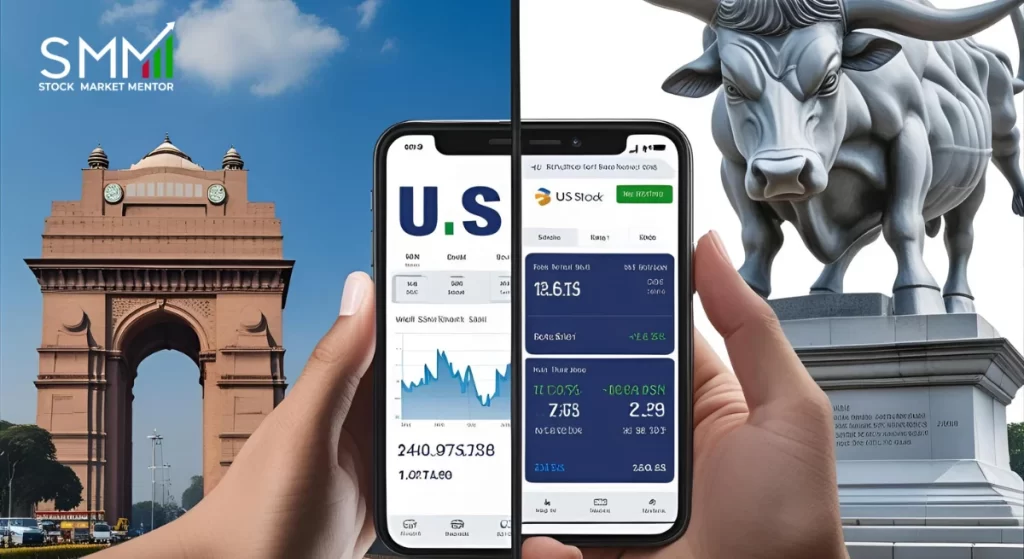
Over the past few years, there’s been a growing interest among Indian investors to tap into the US stock market. Especially when high-profile US companies go public, the buzz reaches Indian shores too.
But one question always remains – can Indian investors take part in US IPOs too? If yes, how exactly can one do it?
In this blog, we’ll walk you through everything: what makes US IPOs attractive, how the process works, what rules apply to Indian investors, and how you can get started safely and legally. This guide will help you invest in US IPOs from India with clarity.
What Is a US IPO?
A US IPO, or Initial Public Offering, is just when a private company decides to go public and offer its stock to the average investor for the first time. At this stage, the firm gets listed with stock exchanges such as the New York Stock Exchange ( NYSE ) or Nasdaq, and its shares start to be publicly traded.
Some IPOs have turned into massive success stories over time. Others, not so much. That’s why it’s important to understand how things work before you decide to invest in US IPOs from India.
Data: 2026 saw the most growth in U.S. listings in almost 10 years. Seven of the ten largest initial public offerings (IPOs) of the year, including in AI, aerospace and biotech, raised $129.3 billion, the most in US exchange history, on Nasdaq in the first half of 2026. Operating-company IPOs had raised $140 billion by mid-July, close to the full-year record set in 2021. SpaceX’s Nasdaq debut raised a record $2 trillion.
How Do US IPOs Differ from Indian IPOs?
At first glance, IPOs in the US and India may appear similar, both are helping companies to raise money. But the way in which investors get involved is quite different.
Feature | US IPO | Indian IPO |
Regulator | SEC | SEBI |
Exchanges | NYSE, Nasdaq | NSE, BSE |
Currency | USD | INR |
Allocation | Book-building & institutional allocation. | ASBA with retail quota |
Application Method | Indication of Interest (IOI) | ASBA |
Retail Participation | Limited and broker dependent | Widely available |

Can Indians Invest in US IPOs from India?
Residents of India are permitted to invest in US IPOs from India provided that they comply with the RBI directives and FEMA laws and other related guidelines.
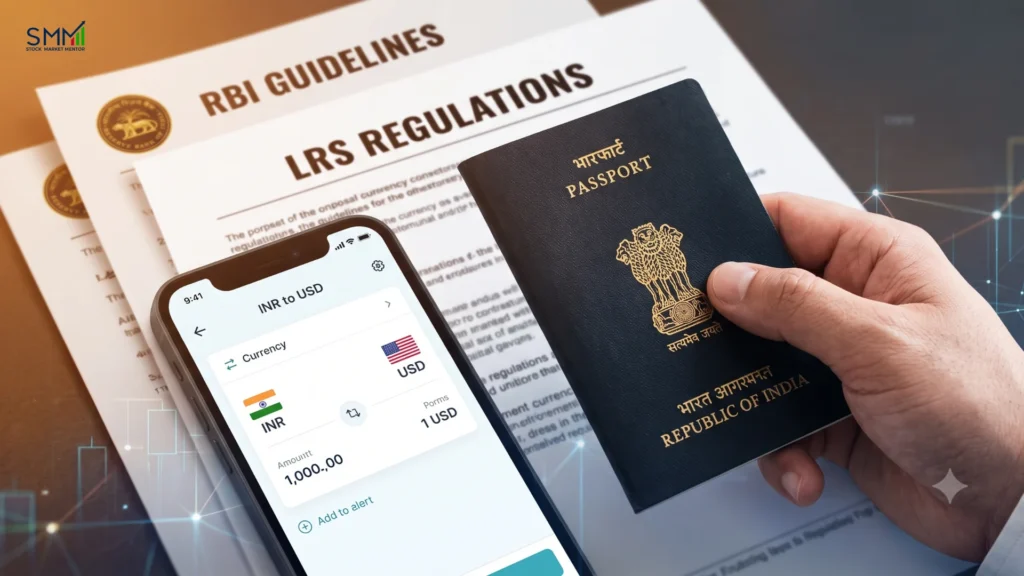
RBI Liberalised Remittance Scheme (LRS)
The RBI Liberalised Remittance Scheme is what makes overseas investing possible for Indian residents.
Under this scheme, you can send money abroad for certain approved purposes, including investing in foreign stocks.
It was introduced by the RBI under FEMA and currently permits resident Indians (including minors, with a guardian’s countersignature) to remit up to USD 250,000 per financial year , across all purposes combined, not per transaction. Anything beyond that requires specific RBI approval. The scheme is documented in the RBI’s official Master Direction.
When making the transfer, remember some guidelines:
- Your transfer should be within the permitted purposes.
- Keep track of all the information regarding tax.
- Know about the charges by your bank and the cost of currency exchange.
- Know whether or not Tax Collected at Source is applicable to your case.
FEMA Guidelines You Should Know
Overseas investments are also governed by the Foreign Exchange Management Act (FEMA).
FEMA basically ensures that your foreign investments are made in a proper way and as per the rules and regulations of India.
To open the international investment account, you are required to do KYC. This often requires you to give your PAN, ID proof, address proof and bank details.
Tax Considerations
Taxes are something you shouldn’t ignore when it comes to cross-border investing.
If you sell US shares at a profit, capital gains tax applies based on Indian tax rules only, the US does not levy capital gains tax on non-resident aliens. Dividends are a different story: US companies typically withhold 25% tax at source on dividends paid to Indian resident investors. You still have to declare this dividend income in India under “Income from Other Sources,” but the India-US DTAA lets you claim the US tax already withheld as a credit against your Indian tax liability, via Form 67 and Schedule TR in your ITR, filed before you file your return, not after.
The GIFT City Route: A Fourth Option You Probably Didn't Know About
This genuinely changes the decision for a lot of Indian investors: you no longer need an overseas brokerage account at all.
Since 2022, India’s own International Financial Services Centre at GIFT City, Gujarat has offered an India-regulated route into US-listed stocks. Two exchanges, NSE International Exchange (NSE IX) and India International Exchange (India INX), operate inside GIFT City under a single unified regulator, the International Financial Services Centres Authority (IFSCA), instead of SEBI, RBI, IRDAI, and PFRDA separately.
NSE IX introduced Unsponsored Depository Receipts (UDRs) for major US stocks, letting Indian investors buy fractional exposure to names like Apple, Microsoft, and Tesla through a demat account held with an Indian custodian, in US dollars, without opening a US brokerage account. If you’d like to understand how this investment route works in greater detail, read our complete guide on the GIFT City Global Stock Gateway.
Why this matters for IPO investors in particular: GIFT City saw its first home-grown IPO in March 2026, XED Executive Development Ltd, a dollar-denominated offering priced at US$10–10.5 per share, open to NRIs, FPIs, and other eligible global investors, listed on NSE IX and India INX. It’s an early hint that GIFT City is beginning to act as a real capital-raising venue in its own right, not just a pass-through for US stocks.

Ways to Invest in US IPOs from India
Once you get a basic idea of how US IPOs work, the next question is pretty simple, how do you actually invest in them from India?
International Brokerage Platforms
A very simple way is by using foreign brokerage platforms. Some of these brokers give eligible investors access to US IPOs.
Often these platforms will partner with investment banks that will manage the allocation of the IPO. Besides IPO access, they also provide you tools like research papers, market data, and access to a wide choice of U.S. equities and ETFs.
Indian Brokers Offering Global Investing
A lot of Indian brokers now offer international investing options, which makes it easier to buy US shares from India.
But here’s the catch, while many of them let you invest in US-listed stocks, not all of them give you access to IPOs before listing.
So if your goal is specifically to invest in a company before it starts trading, don’t assume every platform will support that.
IPO-focused ETFs
Instead of betting on one company, these funds invest in a group of recently listed companies. That way if one stock does do well, the rest of the basket can help compensate.
Feature | International Brokers | Indian Brokers | IPO ETFs |
Direct IPO Participation | Usually available | Limited | No |
Own Individual Shares | Yes | Yes | No |
Diversification | Low | Low | High |
Risk | High | High | Moderate |
Investment Control | High | High | Moderate |
Best For | Experienced Investors | Beginners | Long-term Investors |
Want to invest with more confidence?
How to Invest in US IPOs from India (Step-by-Step Guide)
Let’s work through this step-by-step:
Step 1: Find a Broker with Access to US IPOs
Choose a brokerage that offers US IPO investment services first.
Do not simply choose the cheapest choice. See if they really let you buy into IPOs, how user-friendly their platform is, how they manage foreign transfers and how fast their support staff respond.
Step 2: Complete KYC and Account Verification
Once you’ve selected a broker, you’ll need to open your account.
This usually means providing your PAN, ID proof, address proof, bank details and may be a few other forms related to offshore investment. Some sites also require tax declarations sometimes.
Step 3: Transfer Funds Under the RBI Liberalised Remittance Scheme
Under the RBI Liberalised Remittance Scheme, your bank will convert your money from INR to USD and send it to a foreign destination.
Just keep in mind, the amount that actually hits your account may be somewhat less than what you sent. That’s because of conversion charges, bank fees and other little costs.
Step 4: Submit Your IPO Application
Unlike Indian IPOs, where you apply through ASBA, US IPOs usually require something called an Indication of Interest (IOI).
This doesn’t guarantee you’ll get shares. It simply tells your broker that you’re interested in a particular IPO. If the IPO is in high demand, it may be oversubscribed. In that case, you might get all the shares you asked for, only some of them, or none at all.
Step 5: Receive Allocation and Track the Listing
If, however, you do receive an allocation, the stocks will be credited to your account after completion of the IPO.
Once the company goes public on either the NYSE or Nasdaq, the stock is traded like any other stock.
Investment Journey at a Glance
Choose a Broker
│
Complete KYC Verification
│
Transfer Funds Under RBI’s LRS
│
Convert INR to USD
│
Browse Eligible US IPOs
│
Submit Indication of Interest (IOI)
│
Receive Allocation (If Successful)
│
IPO Lists on NYSE or Nasdaq
│
Monitor Performance and Decide Whether to Hold or Sell
Can You Really Buy US IPO Shares at the IPO Price?
A lot of people assume that applying for a US IPO works just like it does in India. But that’s not really the case.
In the US, investment banks handle the IPO process and distribute shares mainly to institutional investors and selected clients of brokerage firms. Retail investors usually get access only if their broker is part of the underwriting syndicate, and even syndicate members don’t receive equal allocations to distribute to their own clients. The SEC has been direct about this: it does not regulate how underwriters choose to allocate shares between institutions and individuals, since that’s treated as a business decision, not a securities-law requirement.
Even then, you don’t submit a guaranteed application. Instead, you place something called an Indication of Interest (IOI). This just tells your broker that you’d like to participate if shares are available.
If the IPO is in high demand, which often happens, you might get fewer shares than you asked for, or none at all. This is called oversubscription.
Because of this uncertainty, many Indian investors take a different approach. Instead of waiting for an allocation, they simply track the listing and buy US IPO shares once trading begins on the NYSE or Nasdaq.
Costs You Should Know Before You Invest in The US Shares
Before you buy US shares from India, it’s important to understand the costs involved.
Apart from the fees charged by brokers, there will be charges on account of foreign exchange transactions and international transfers. Beyond the ₹10 lakh threshold, Tax Collected at Source (TCS) comes into the picture at 20% for most investment remittances. It is not an additional tax on top of what you owe, it’s adjustable against your final tax liability when you file, but you do have to wait for that adjustment or refund.
What Are The Risks of Cross-Border Investing?
Every investment comes with risk, and cross-border investing is no different.
- IPO prices are quite volatile, especially in the first few days. There are no guarantees of returns and things might change quickly.
- And changes in currency really do matter. Even if the stock does well, variations in the USD-INR currency can affect your eventual returns.
- Then there is the allocation problem, where you may not receive the shares you requested, especially in popular IPOs.
- Besides, rules and regulations can change with time, in India and US as well. If you’re planning to invest internationally, it’s also worth understanding the broader risks of investing in global markets, including geopolitical events, currency fluctuations, and market-specific regulations.
What Happens After a US IPO Lists?
A lot of people focus only on getting IPO shares, but what happens after listing matters just as much.
On the first day, prices can move a lot. Some stocks shoot up, while others drop below their IPO price pretty quickly.
There’s also something called a lock-up period. At this point, early investors and insiders normally aren’t allowed to sell their shares. When that period finishes, new shares can come on the market and that can have an impact on the price.
Instead than reacting to short-term swings, it’s best to look at the fundamentals of the firm, factors like earnings, growth potential and competition, before making a decision.
Expert Insight: The first-week chart of an IPO tells you almost nothing about the company, it tells you about order flow and sentiment. We tell students to mentally ‘mute’ the stock for the first few weeks and revisit it once the lock-up-driven volatility settles, rather than making a hold-or-sell call off day-two price action
Is US IPO Investment Right for You?
A US IPO could be a good way to go, if you are an investor who is interested to invest in foreign stocks and diversifying your portfolio. It would be right for you if:
- You are seeking global companies.
- Thinking in the long term.
- Are thinking long term.
- Understand that IPO prices can be unpredictable.
- Are okay with currency fluctuations.
Common Mistakes to Avoid When You Invest in US IPOs from India
A lot of new investors jump into IPOs because of hype, news headlines, social media buzz, or just fear of missing out. Understanding the mistakes to avoid in stock trading can help you make more disciplined investment decisions before participating in any IPO. But that’s not the best way to invest. Here are some mistakes to avoid:
- Investing blindly in the business.
- Not valuing just because IPO is hot.
- Without considering the expense of currency and taxes.
- Putting too much money into a single IPO.
- Not having a clear IPO investing strategy.
Expert Insight: Hype and fundamentals are two different signals, and the mistake we see most often is treating media buzz as if it were research. Before applying to any IPO, write down the two or three reasons you’d want to hold this company for three years, without mentioning the words ‘IPO’ or ‘listing gains’ anywhere in that answer. If you can’t, that’s information too.
What Are The US IPO Sectors Worth Watching?
Instead of chasing individual companies, it can help to keep an eye on broader sectors. Some of the sectors are:
- AI
- Aerospace & Defense
- Biotech
- Semiconductors
- Quantum Computing
- Clean/Geothermal Energy
A Quick Framework Before You Apply: The 4-Question IOI Check
Before you submit an Indication of Interest on any US IPO, run it through four questions:
- Does my broker actually participate in this specific offering’s underwriting syndicate? Not all “US IPO access” brokers get every deal.
- What’s my realistic allocation expectation? Oversubscribed, high-media-attention IPOs typically skew allocation toward institutions; size your expectations and your capital commitment accordingly.
- Have I checked the lock-up expiry date? Insider selling around the ~180-day mark can pressure the stock independent of fundamentals.
- Does this fit inside my remaining LRS headroom for the year? Remember, the USD 250,000 cap is cumulative across every purpose you’ve already remitted for in that financial year, not just this one investment.
Invest in US IPOs from India with Confidence With Stock Market Mentor
If you are looking to invest in US IPOs from India, it is an excellent approach to go outside the local market and explore new prospects. But before we jump in, it’s necessary to understand how things work. Spend some time learning about the company, how US IPOs function, and what rules apply when investing from India.
At the end of the day, the more you understand, the better decisions you’ll make. If you’re trying to learn more about global markets or just want to get clearer on investing basics, something like a Stock Market Mentor can help you along the way.
Disclaimer: This article is for general informational purposes and does not constitute investment, tax, or legal advice. RBI, FEMA, and Income Tax Act provisions referenced here are current as of July 2026 and are subject to change. Please verify current limits and rules with the RBI, Income Tax Department, or a qualified CA before acting, and consult a SEBI-registered investment adviser for personalized investment decisions.